
Intelligent Interoperability
From data into intelligence
Healthcare runs on data. Clinical and business decisions depend on it. But too much raw data fragments attention, fuels alert fatigue, and buries critical signals. Today’s challenge is no longer data access — it’s data utility. Decision makers need synthesis — context-aware summaries, prioritized risks, and recommendations that translate data into clear next steps. Simply put, they need tools that turn raw data into actionable intelligence.
That’s Traverse Exchange by MEDITECH.


Traverse Exchange
MEDITECH's National Data Exchange Network
Traverse Exchange seamlessly tackles both the data access and data utility challenges, turning raw data into actionable intelligence. It doesn’t simply share and receive data. It consolidates, deduplicates, and organizes it. Providing an on-ramp to TEFCA, with connections to CMS-aligned networks, Traverse Exchange enables MEDITECH customers across the United States to share health data seamlessly and securely with any EHR connected to a Qualified Health Information Network (QHIN). For organizations in Canada, it connects hospitals using MEDITECH Expanse with hundreds of long-term care sites using multiple EHRs.
Discover what’s possible when clinicians have all available data, made meaningful, directly within their workflow, right inside their EHR.

Reduced Clinician Burden
Not just access to data — access to the RIGHT data
- Streamlines access to patient clinical data
- Avoids large document data dumps
- Presents data intuitively within workflows

Empowered Patients
Meets patients where they are, whether they seek care locally or nationally
- Reduces repeated requests for patient histories
- Builds trust and engagement
- Fosters patient loyalty

Organizational Independence
Strengthens autonomy and sustainability
- Simplifies access to data from other EHRs
- Improves organizational operations
- Facilitates community outreach
Real People. Real Stories.
The real impact of interoperability.
A worried patient gets results
A heart failure patient in Iowa had an echocardiogram performed by a specialist at a large academic medical center hours away from his home. Shortly after, his local physician logged into the patient’s chart in MEDITECH Expanse and used Traverse Exchange to access the results, less than an hour after the exam. The doctor was able to call his patient during his drive home.

This rapid access provided an anxious patient and his wife immediate peace of mind before they drove the rest of the way home.
Doug Kanis, DO
Chief Medical Information Officer
Hundreds of visits, multiple states
An orthopedic surgeon in Missouri was preparing for surgery with a patient that had nearly 400 visits to organizations across several states. Prior to Traverse Exchange, she would have spent hours manually reviewing hundreds of documents. Using Traverse Exchange’s Consolidated Patient Summary, it took her just minutes to review the patient’s history and prepare for surgery.

It fundamentally changed the provider's perception of the value of interoperable care data.
Priscilla Frase, MD
Hospitalist & CMIO

A grateful patient remains enrolled
A patient in Southern California approached his healthcare provider with an urgent request. He needed a letter from a clinician to re-apply for SSI disability, along with a confusing collection of supporting documentation. The patient had been admitted to another hospital a few months earlier, and using Traverse Exchange she was able to locate the imaging, labs, and consults from that visit to draft the letter and supporting documentation in minutes — rather than hours — with her patient in the room.

It was a real time saver and it resulted in an extremely grateful patient. It ensured they remained enrolled without a lapse in coverage.
Andrea Douglas, PA-C
Family Medicine
Lower Burden. Better Care.
MEDITECH's Allison Palltroni speaks with Andrea Douglas, PA-C, a Physician Assistant at Emanate Health, about how MEDITECH’s Traverse Exchange and Consolidated Patient Summary are streamlining clinical workflows, eliminating manual data collection, and giving clinicians faster access to the information they need.

The Consolidated Patient Summary brings information together in a practical, usable way. Instead of asking providers to click through multiple documents to find what they need, the Summary organizes the information into one easy-to-access view. That makes it faster and simpler for providers to find relevant information while they are caring for the patient.
Craig Rice, CHCIO, CDH-E
Vice President &
Chief Information Officer


One of our orthopedic surgeons had a patient who had hundreds of visits across multiple states. He used Traverse Exchange to get a holistic, organized, longitudinal view of the patient’s history within minutes — a process that would have previously taken hours if not days. It fundamentally changed his perception of the value of interoperable care data.
Priscilla Frase, MD
Hospitalist & CMIO

Getting that initial snapshot of all the different categories of documents — such as any type of medication or any type of procedure — in one easy-to-read view has been very beneficial for our specialists.
Kristin Conley, DO
Chief Medical Information Officer

I could see the excitement on everybody's face. They can have all that data that previously you'd have in hundreds and hundreds of documents you'd have to read through… From a technical lift there wasn't much for us to do. MEDITECH really helped us set it up. We didn't have to add any extra FTEs.
Tito Perez
Corporate Director
Enterprise Applications
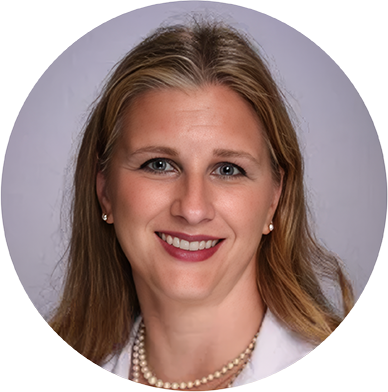
Traverse Exchange fills in the gaps when patients don't know or can't recall all of their medical history. It really helps when I can access information about care they've received elsewhere. It's also helpful for reducing duplicative tests because I can see what has already been done with other providers.
Andrea Douglas, PA-C
Family Medicine

As an organization, we are committed to advancing interoperability as a means of improving healthcare delivery and outcomes. Traverse Exchange in Canada has enabled more Ontario organizations than ever to conveniently exchange key patient health data.
Peter Bak
Chief Information Officer

With MEDITECH's Traverse Exchange, Ferry County Health patients receive faster, more coordinated care through seamless information sharing across healthcare providers. This collaboration allows us to improve treatment accuracy, reduce duplicate testing, and ultimately enhance patient outcomes. By connecting with a broader network of specialists and resources, we are ensuring that every patient receives the quality of care they deserve, right here in our community.
James Davidson
IT Director & CISO
Stay Strong. Remain Independent.
With Traverse Exchange, you remain in control of your data — and your future — with the tools you need to connect to other care organizations. Help your clinicians access the right data at the right time to provide the best, most efficient care possible.

Improved Efficiency & Outcomes
Boosts financial and health performance
- Helps identify targeted treatments
- Reduces duplicate testing
- Improves patient outcomes and satisfaction

An Open Ecosystem of Innovation
Scalable & future-proof
- Built on modern architecture and open APIs
- Promotes data fluidity with integrity and security

A Level Playing Field
For rural providers
- Provides access to the same data larger organizations have
- Eliminates complex data-sharing agreements
Traverse Exchange by the Numbers

44M+
Patient lives impacted

800+
MEDITECH facilities actively exchanging data

500M+
Total documents exchanged
Proudly Supporting
the CMS Interoperability Framework
and “Kill the Clipboard” Initiative
MEDITECH has been a champion of interoperability for decades. We were the first vendor to successfully support the CCD — and now we're leading the charge to move beyond it. We have proudly pledged to implement the CMS Interoperability Framework and support our customers' participation in CMS Aligned Networks. We also committed to the CMS “Kill the Clipboard” initiative, which empowers patients to retrieve their health records from CMS Aligned Networks or personal health record apps — and share them with providers via QR codes or Smart Health Cards.
Let’s put patients back where they belong: in the center of the care model.
An Open Ecosystem for Innovation
MEDITECH actively participates with leading organizations and initiatives advancing interoperability, ensuring that our customers are always ahead of the curve.
The Argonaut Project is a private sector initiative to advance industry adoption of modern, open interoperability standards. Launched in 2014, it has rapidly developed the FHIR-based API and Core Data Services specification to enable expanded information sharing for EHRs.
The FHIR at Scale Taskforce (FAST) identifies Fast Healthcare Interoperability Resources (FHIR) scalability gaps, defines solutions to address current barriers, and identifies needed infrastructure for scalable FHIR solutions. Launched as an ONC-convened initiative, FAST has transitioned to an HL7 FHIR Accelerator focused on the infrastructure needed to scale FHIR.
The Gravity Project is a national public collaborative that develops consensus-based data standards to improve how information is shared and used on social determinants of health (SDOH). Founded in 2017, its members advance equitable health and social care by leading the development and validation of consensus-driven interoperability standards.
360X strives to define implementation guidance to enable EHR interoperability in support of patient transitions of care, particularly around referral management and closing the referral loop, with an aim to add value to patients, clinicians, office staff and overall clinical workflows.

The Da Vinci Project is a private sector initiative that includes payers, providers, and EHR vendors collaborating with HL7 to improve data sharing in value-based care (VBC) arrangements using the HL7 FHIR platform.

Helios is an alliance of government, private sector and philanthropic partners who aim to use widely accepted healthcare standards to help advance public health. It was launched by HL7 and jointly supported by the Centers for Disease Control and Prevention (CDC) and the Office of the National Coordinator for Health IT (ONC).
DirectTrust is a non-profit alliance of Health Information Service Providers (HISPs), Certificate Authorities (CAs), Registration Authorities (RAs), healthcare providers, consumers/patients, and Health IT vendors working to develop, promote, and enforce rules and best practices for maintaining security and trust within the Direct Secure Messaging community.
Learn how a strong interoperability strategy can reduce clinician burden, improve patient care, and preserve your autonomy.