

Customer Impact
Transforming Hospital Transport: The Early Adopter Journey
Opportunity
Berkshire Health Systems and Frederick Health identified the opportunity to replace fragmented, inefficient, manual processes for transporting patients, equipment, and other items with streamlined, modernized, and automated EHR workflows.
Results
The sites have significantly improved response times, reduced call volumes, and increased transport capacity.
Key Product
Expanse Transport

28%
Quicker response time at Berkshire Health Systems


82%
Daily patient transports at Berkshire Health Systems


64%
Daily phone calls at Frederick Health
“I think the drop in phone calls per day is what really demonstrates how valuable this tool is. Prior to implementing Expanse Transport, every single patient transport was a call to the transport coordinator desk. As soon as we went LIVE, the need for that call was completely eliminated.”

Kaitlyn Kohlenberger
IT Manager
Berkshire Health Systems

“Prior to Expanse Transport, we had a coordinator who had to be available to field calls for transport requests, complete data entry into Excel for tracking, and print the round-trip document to hand off to the transporter with patient information. Now we are able to pull the coordinator when the Transport department is busy and utilize auto assignments. This has been extremely helpful due to staffing limitations.”

Ann Kerwood, RN, BSN, BBA
IT Director
Berkshire Health Systems
“We have had a huge drop in calls to our transport department since go-LIVE, and patient transport volumes have increased, since we are capturing and getting credit for transports that we weren’t previously. Transport has been great for tracking productivity and properly staffing our department. MEDITECH listened to our needs and was able to deliver customized features and dashboards, which have increased efficiency and employee satisfaction.”
Kathryne Bunn, RN
Manager of Nursing Resources
Frederick Health

About Berkshire Health Systems
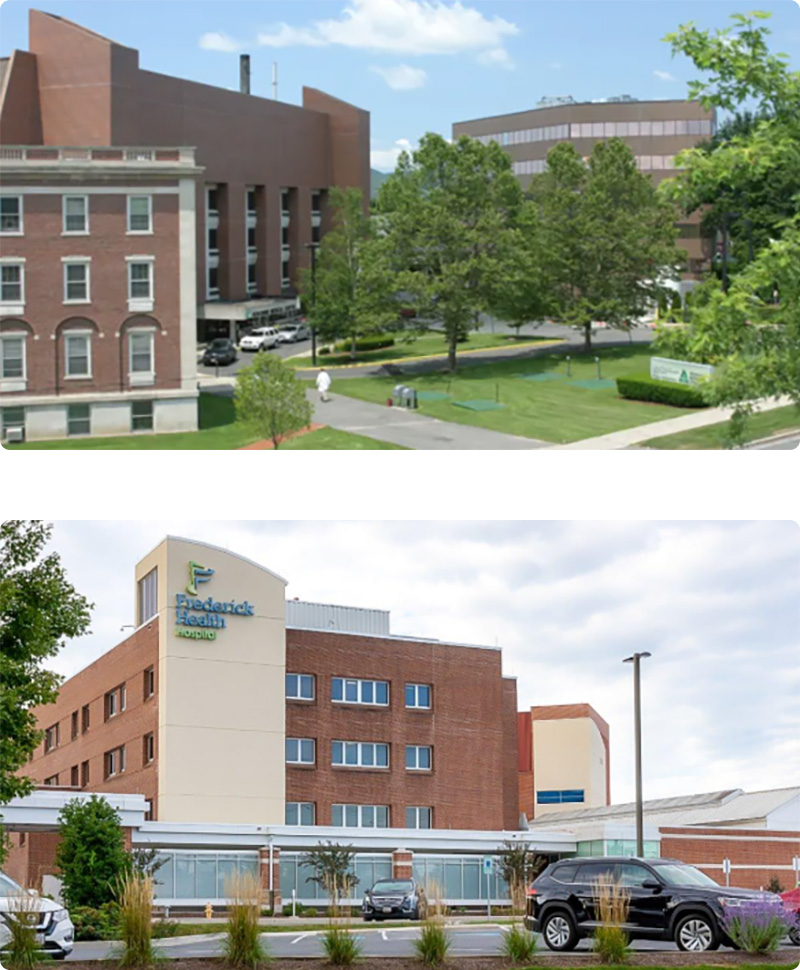
Berkshire Health Systems (BHS) is based in western Massachusetts and includes an integrated system of three inpatient hospitals, 24-hour emergency care, outpatient diagnostic and therapeutic services, daily urgent care, a cancer center in collaboration with the Dana-Farber Cancer Institute, and a medical group with more than 30 provider clinics. The organization's flagship hospital, Berkshire Medical Center (BMC), is a 298-bed teaching hospital that operates three independent residency programs in medicine, surgery, and psychiatry. BMC holds a 4-star CMS rating and has earned CHIME’s Digital Health Most Wired Level 8 designation for both acute and ambulatory care.
About Frederick Health
Frederick Health is based in central Maryland and is the only acute care provider in Frederick County. The health system includes a 269-bed hospital, 4,000+ team members, and 26 locations. Frederick Health Medical Group is the largest multispecialty network and the second-largest primary care provider in the county, offering 20+ specialties. The system also operates three emergency departments (including Frederick Health Hospital ED, which has a very high annual volume of 60,000+ patients) and a cancer center. Frederick Health has earned several recognitions, including Magnet Designation, CHIME Most Wired Level 8, and HIMSS EMRAM Stage 7.
The Challenge
Berkshire Medical Center and Frederick Health both recognized a critical need to modernize their patient and item transport workflows. Their legacy processes were labor-intensive, dependent on multiple daily phone calls, paper forms, and staff interruptions. At BMC, the patient transport workflow required staff to complete an intervention in PCS, print the details in the transport office, and then physically carry the paper containing patient information to facilitate the transfer. At Frederick Health, transfer Patient Flow Coordinators previously had to record requests in one system, notify transporters through another, and also call each transporter directly as part of their workflow.
These manual systems at each of the facilities led to increased response times, inefficiency, and a lack of visibility into transport operations — making it difficult to coordinate resources efficiently and ensure prompt patient movement. The lack of real-time data further limited the organizations’ ability to analyze trends or identify areas for improvement, hindering their goals of enhancing clinical efficiency and patient care.
The Solution
Berkshire Medical Center and Frederick Health successfully implemented Expanse Transport, seamlessly integrating it with their MEDITECH Expanse EHR to fully digitize and automate their transport workflows. This solution established a complete, end-to-end transport process within Expanse, embedding requests directly into existing clinical workflows and delivering real-time data for sustained process improvement. The implementation, which included mobile capabilities and a coordinator dashboard, was a success for the early adopter organizations. At Frederick Health, features such as the ‘Ticket to Ride’ — a customized Patient Request Report built into Expanse Transport — further strengthened the system’s impact. Throughout the deployment process, clinical engagement was prioritized:
“Clinical involvement is critical," said Kaitlyn Kohlenberger, IT Manager at Berkshire Health Systems. "This is much more than just an application for the transport team; it’s system-wide and necessary to involve clinicians and staff across teams.”
By actively involving stakeholders across departments and clearly communicating the value of the initiative, the organizations ensured a smooth transition to the new digital workflow. As early adopters, both organizations benefited from a close and collaborative partnership with the MEDITECH development team, providing direct feedback to guide the product's evolution. This close partnership ensured heavy MEDITECH support throughout the process, including frequent meetings, key resource delegation, on-site support for go-live, and a continued relationship as a stakeholder for future enhancements.
“We were very excited to be an early adopter of Expanse Patient Transport," said Joe Sainz, IT Manager at Frederick Health. "We’ve been an early adopter of several MEDITECH applications, and we’ve discovered many benefits of working with the development team. This close relationship, coupled with the heavy support from across MEDITECH teams, has been instrumental to our successful implementation and clinical advancements.”
The Impact
After implementing Expanse Transport, both Berkshire Medical Center and Frederick Health achieved substantial improvements in operational efficiency. Since go-live, Frederick Health has seen a significant drop in calls and an increase in patient transport volumes. This is in part because of Expanse Transport’s real-time, centralized tracker that allows the organization to monitor active transport requests and capture credit for transports that were previously unrecorded. BMC has seen significant improvements using Expanse Transport’s auto-assignment functionality, enabling them to optimize resources by involving coordinators when the Transport department is busy — a particularly valuable benefit given staffing limitations. This success demonstrates the effectiveness of the new digital workflows, as the enhanced visibility and real-time analytics supported more efficient resource allocation, minimized manual data entry, and contributed to improved patient flow, greater staff satisfaction, and elevated standards for clinical operations.
Learn more about how Transport increases efficiency and transparency, while reducing manual work across departments.